Eternal Scroll
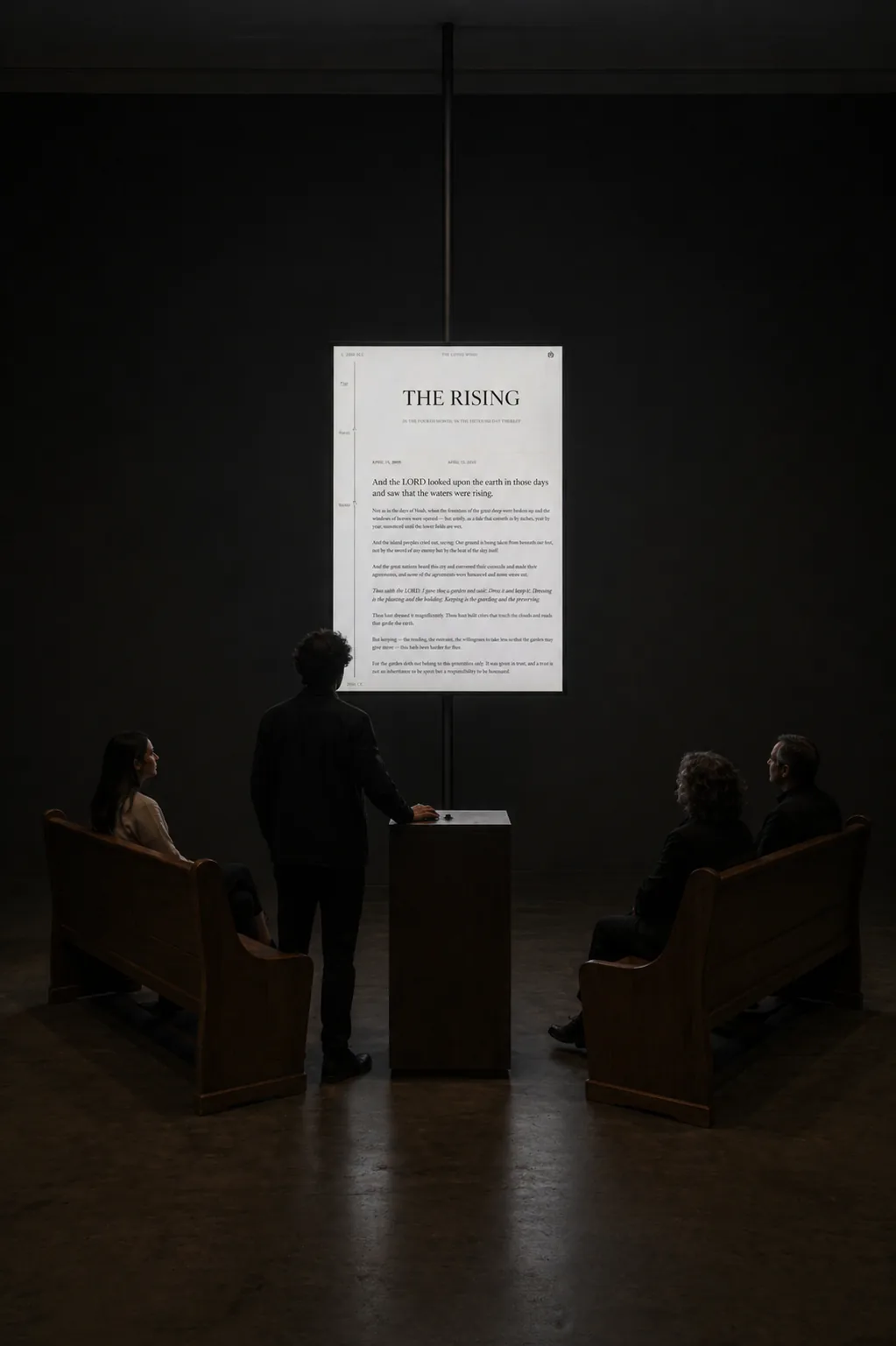
Eternal Scroll is a living, browser-based generative artwork that extends the Jewish Bible as one continuous digital scroll, from Genesis to a passage written from this fortnight's news. I conceived, designed, and built it, and the generative system is live and running today.
The work
The project imagines a continuation canon called Toledot: AI-written books that translate the historical gap from the last biblical writings to the present into biblical language, followed by a living section generated from real news every two weeks.
Role & build
I led the full creation of the project: concept, writing, and system logic; interface design and content architecture; the prompt system and generative workflow. I built it hands-on, pairing with Claude Code on the implementation.
Idea and concept
The project began with a speculative question: what if the Jewish Bible did not end as a sealed historical object, but continued as a living scroll?
From there, Eternal Scroll developed into a work about memory, continuity, AI, and cultural inheritance. It treats Jewish textual history as a kind of literary DNA: a vast archive of rhythm, law, lament, argument, exile, return, catastrophe, survival, and renewal. The goal was not to create "new scripture," but to build an artwork that asks what happens when an ancient textual form is revived through a contemporary machine.
The continuation canon, Toledot, means Generations. The name refers both to the generative nature of the AI-written text and to the generations of Jewish heritage that continue to speak through it. This double meaning shaped the entire project: a system that generates text, but also carries lineage.
Solutions
The project required designing both a reading experience and a generative system.
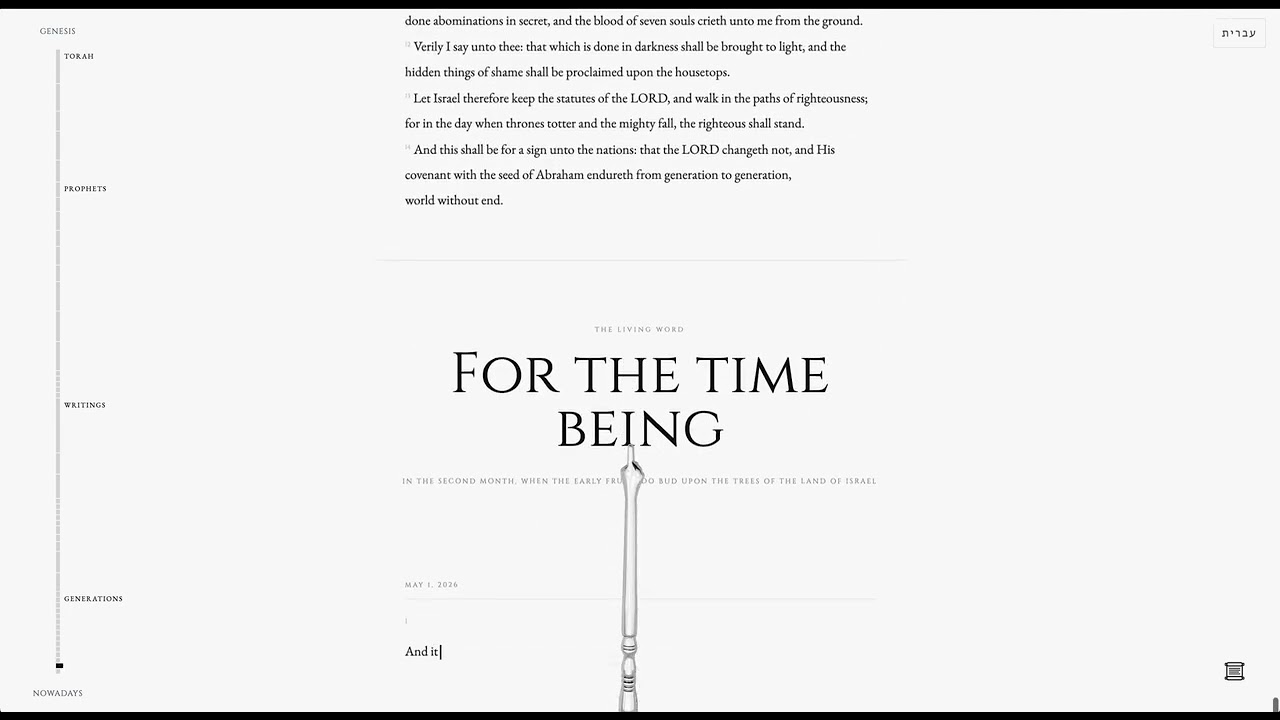
On the interface side, I created a continuous-scroll structure that allows the user to move from Torah, Nevi'im, and Ketuvim into Toledot and the live contemporary section without breaking the sense of one unified textual body. A vertical timeline gives orientation across thousands of years, while the visual language remains restrained: serif typography, generous spacing, drop caps, a pale reading surface, and minimal navigation.
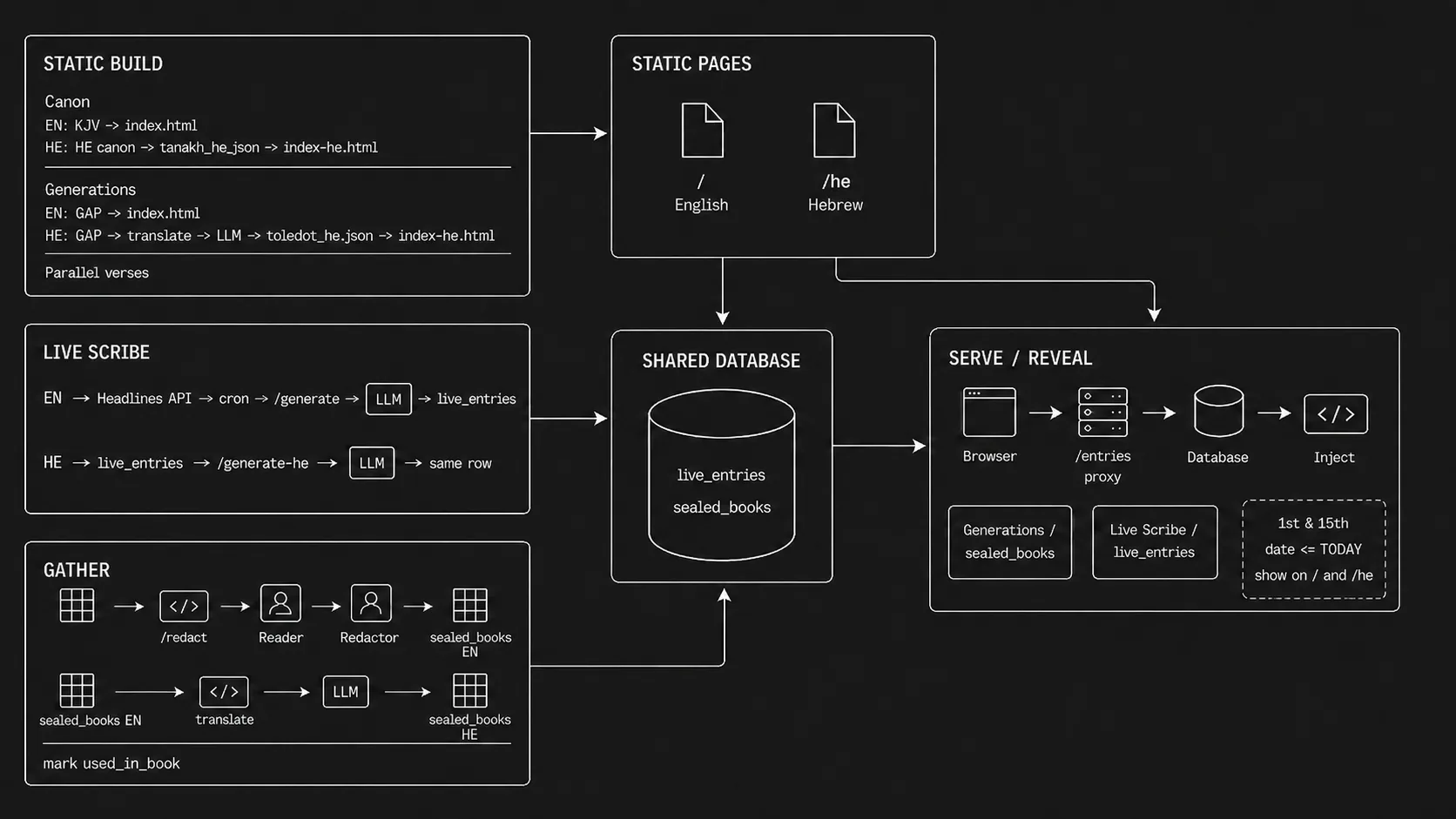
On the content side, I designed the full information architecture of the work. The biblical books are treated as stable source material. The Toledot books form a curated continuation layer, translating historical archives and modern Jewish history into biblical language. At the end of the scroll, a live scribe connects to current events through a News API and generates a new passage every two weeks, running unattended in production. Once a year, those bi-weekly passages are gathered, reviewed, and composed into a new book.
The result is a system that moves through three modes of authorship:
inherited canon
generated historical continuation
live ongoing composition
My role covered the entire process: copywriting, conceptual framing, UX and UI design, data architecture, prompt system design, generative workflow, editorial direction, and the build itself, implemented hands-on with Claude Code as my pair. The deliberate tradeoff in the system design: full automation for the bi-weekly scribe, but human editorial review before passages are composed into a permanent book. The machine writes; the canon is curated.
Eternal Scroll turns generative AI into more than a text-production tool. It becomes a machine-scribe: a system for reanimating inherited language, translating history into literary form, and asking whether cultural memory can continue through a new vessel.
The work is meaningful because the generative process is not decorative or incidental. Generation is the subject of the piece. The AI does not simply create content for the artwork; it embodies the artwork's central question: can an ancient voice, once thought sealed, generate another generation?
As a digital artwork, Eternal Scroll exists between archive and living system. It is readable as a scroll, navigable as an interface, structured as a data system, and sustained by an automated generative process. It brings together design, technology, writing, and Jewish memory into a single evolving work.