Usersnap product pivot
Usersnap bet the company on a new market: out of bug tracking for web agencies, into customer feedback software for SaaS teams. As Lead Designer I ran the discovery, validation and product definition behind that pivot. MRR grew 500% within six months of launch, and saas.group acquired the company in 2023.
The company
Usersnap, a bootstrapped and profitable Austrian company founded in 2012, had built a successful visual bug-tracking tool for web agencies. But the bigger opportunity sat next door: SaaS teams were drowning in feedback arriving through support tickets, emails, sales calls, and forums, with no product built around that workflow.
The bet
Repositioning meant betting the company's existing identity, dashboard, and customer base on a new market, without outside capital to cushion a mistake. The design problem and the business problem were inseparable: a new platform, new personas, and a new go-to-market, shipped without losing the customers who paid the bills.
What I owned
I was the Lead Designer, working directly with the three founders: Josef Trauner (CEO), Haymo Meran (product), and Klaus-M. Schremser (growth). The remit ran the length of the problem: user research and persona definition, the design sprint that set the direction, the product model and task flows, prototyping and testing, the dashboard redesign, and the go-to-market branding for the SaaS market.
The design sprint
To align the whole company behind the pivot, I organized and ran a week-long design sprint with employees and management. The sprint built internal buy-in, clarified the strategic direction, and turned early research insights into a shared product vision. Spending a full week of company time mid-pivot was itself a deliberate bet.
The research
Through interviews and research with SaaS teams I identified six target personas, from product managers to CX and CS leaders, and mapped how feedback actually moved through their organizations. The patterns were consistent: feedback arrived fragmented across channels, owned by different teams, and triaging it meant tediously opening items one by one.
The insight
For SaaS teams the unit of work isn't a bug ticket. It's a feedback conversation that several teams need to see, triage, and close the loop on. That insight set the architecture of the entire redesign.
An inbox, not an issue trackerKey decision · shipped
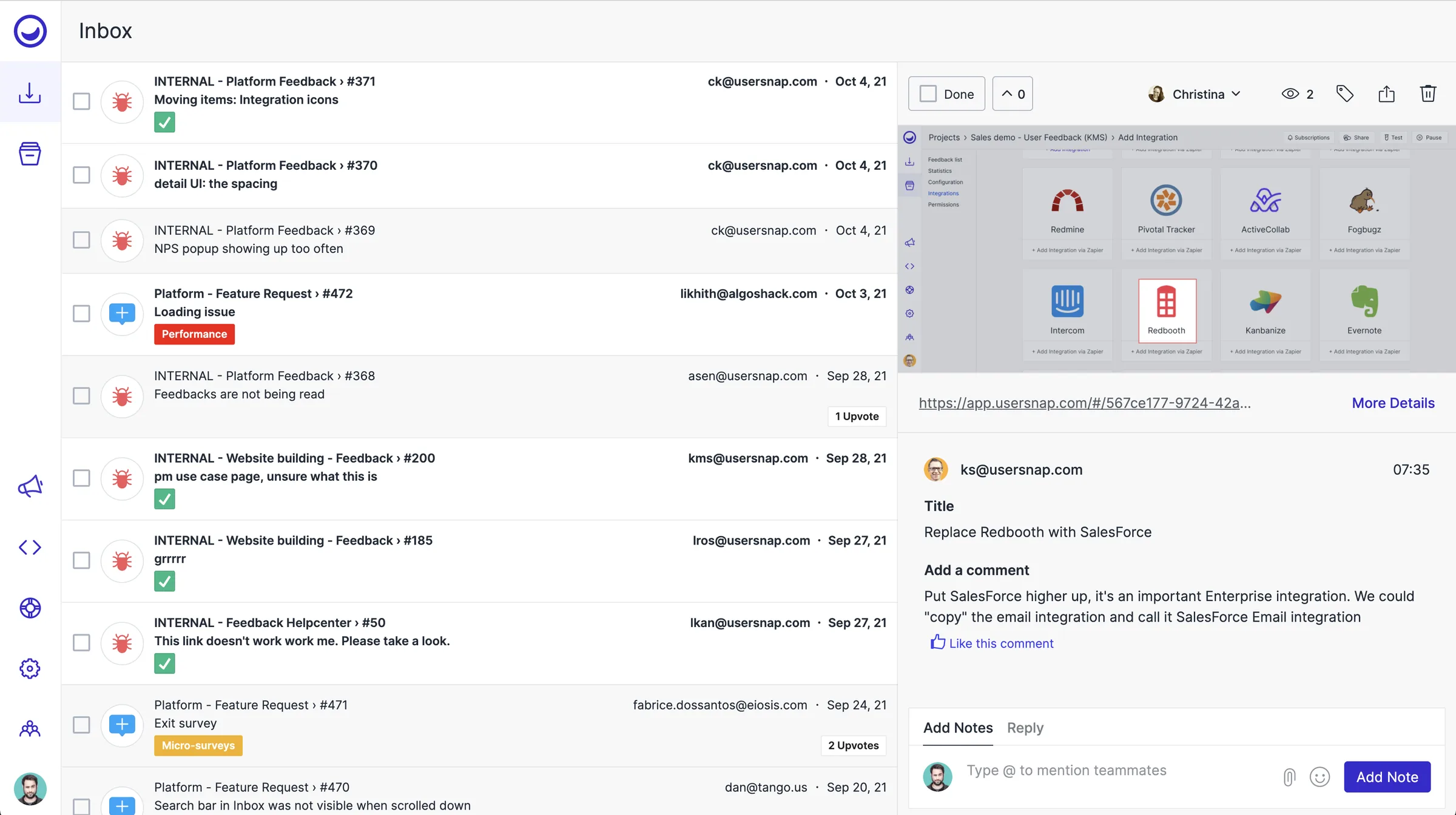
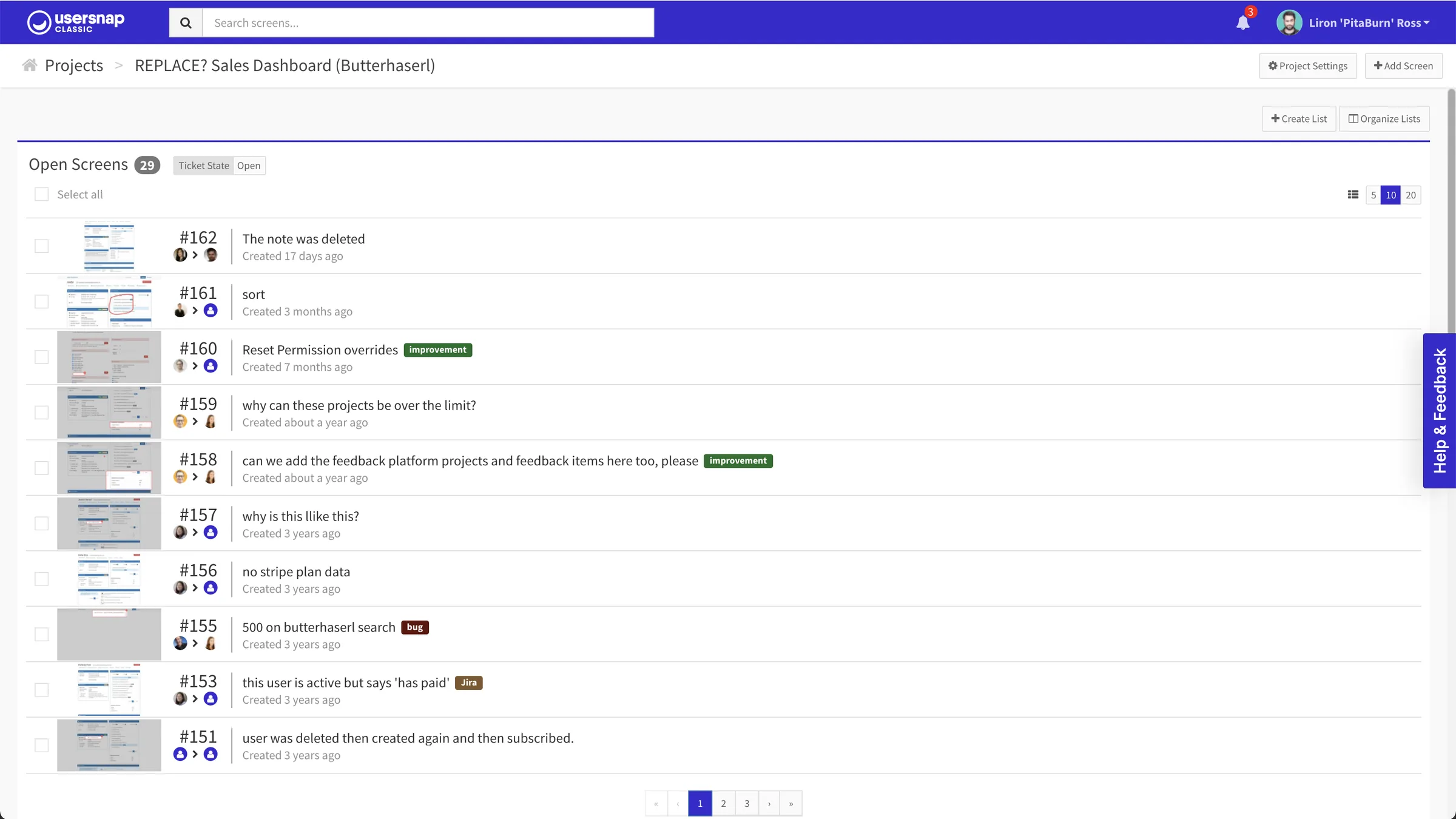
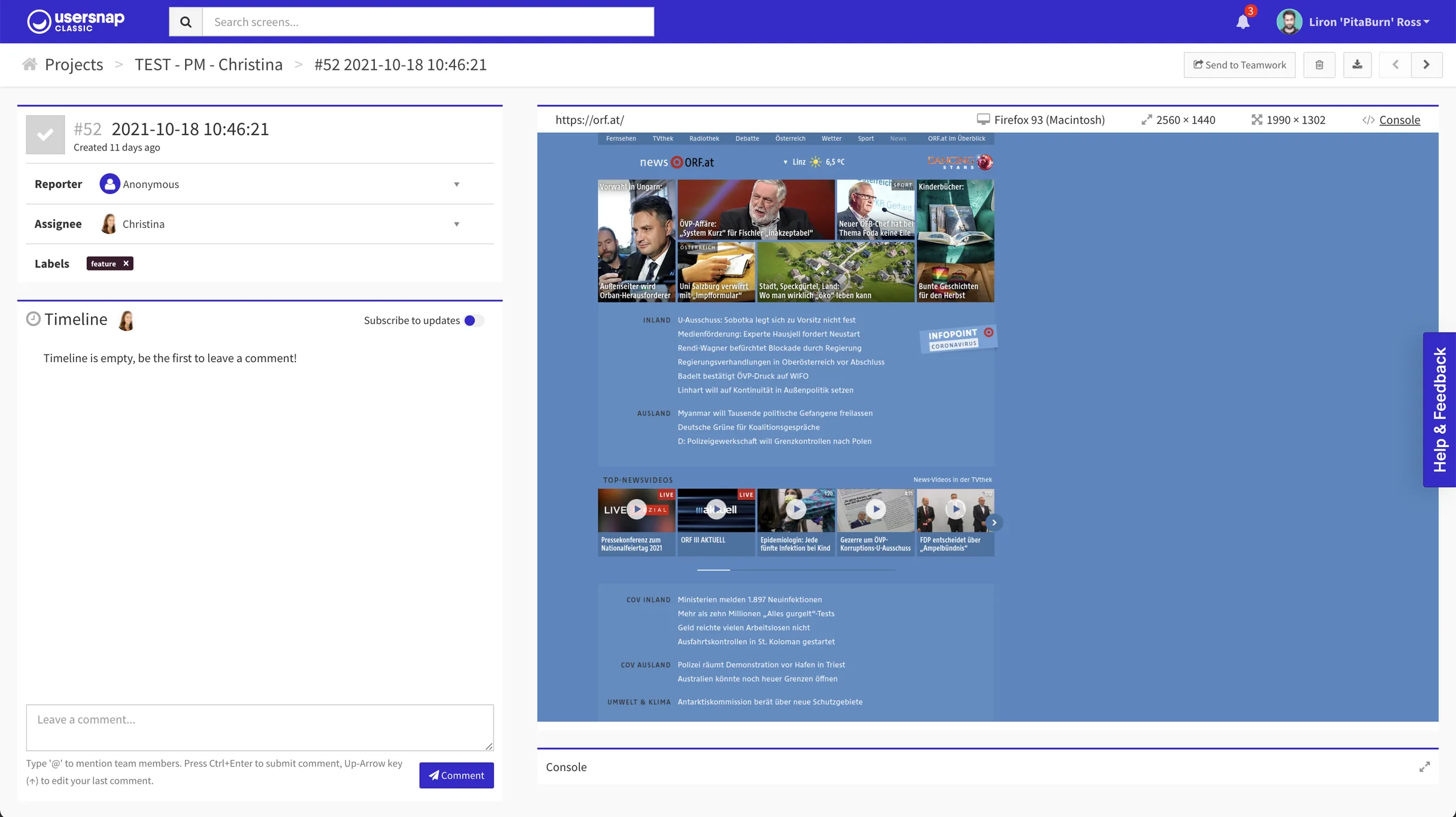
The old dashboard was a list of issues: to evaluate each one you opened its page, went back, opened the next. I redesigned the core as a split-view inbox: browse, filter, and triage high volumes of feedback without ever leaving the list, with bulk actions and collaboration built in.
The tradeoff: existing customers lost nothing functionally, but had to relearn a workflow they knew. We ran the old and new platforms in parallel rather than forcing a switch; within 18 months, 80% had migrated by choice.
Channels with team permissionsKey decision · shipped
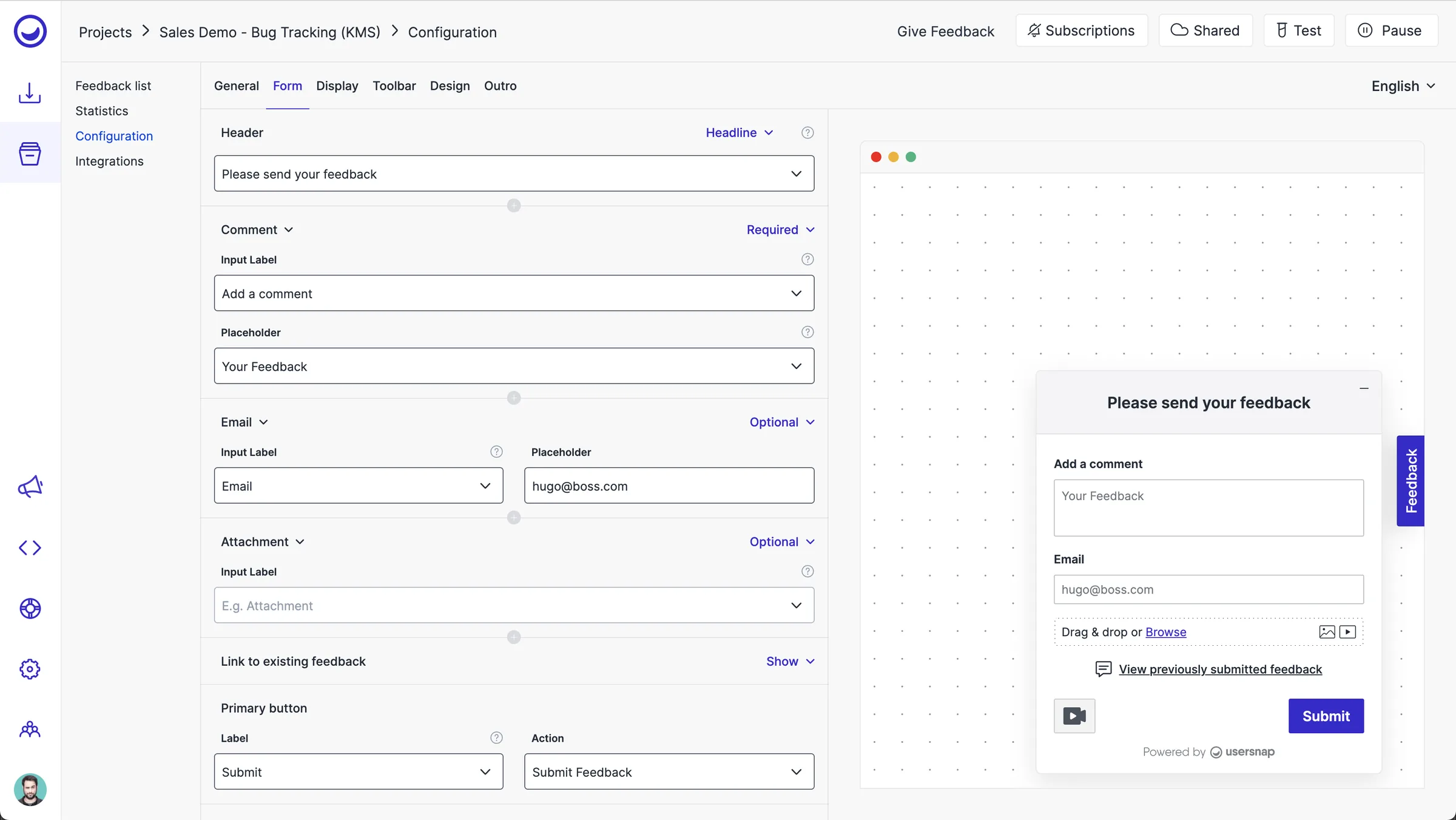
Different teams could now stand up their own in-app collectors on marketing landing pages, in forums, and inside customer support, all feeding into configurable streams with permission settings. A product manager could finally see requests from every source in one place.
The tradeoff was configuration complexity versus out-of-the-box simplicity. We answered it with 13+ ready-made collector templates covering the common QA, feedback, product management, and research setups.
Usersnap's old dashboard
From streams to inbox
The redesign centered on turning fragmented feedback streams into a more flexible, scalable inbox experience. Teams could collect, review, triage, collaborate on, and respond to feedback across multiple channels, moving the product beyond issue tracking into a broader customer feedback workflow.
The new dashboard
The new dashboard introduced a faster split-view interface, configurable streams, bulk actions, collaboration tools, and clearer ways to close the loop with customers. These changes made the platform more intuitive for product managers, QA teams, customer-facing teams, and user researchers working with high volumes of feedback.