Gravolo
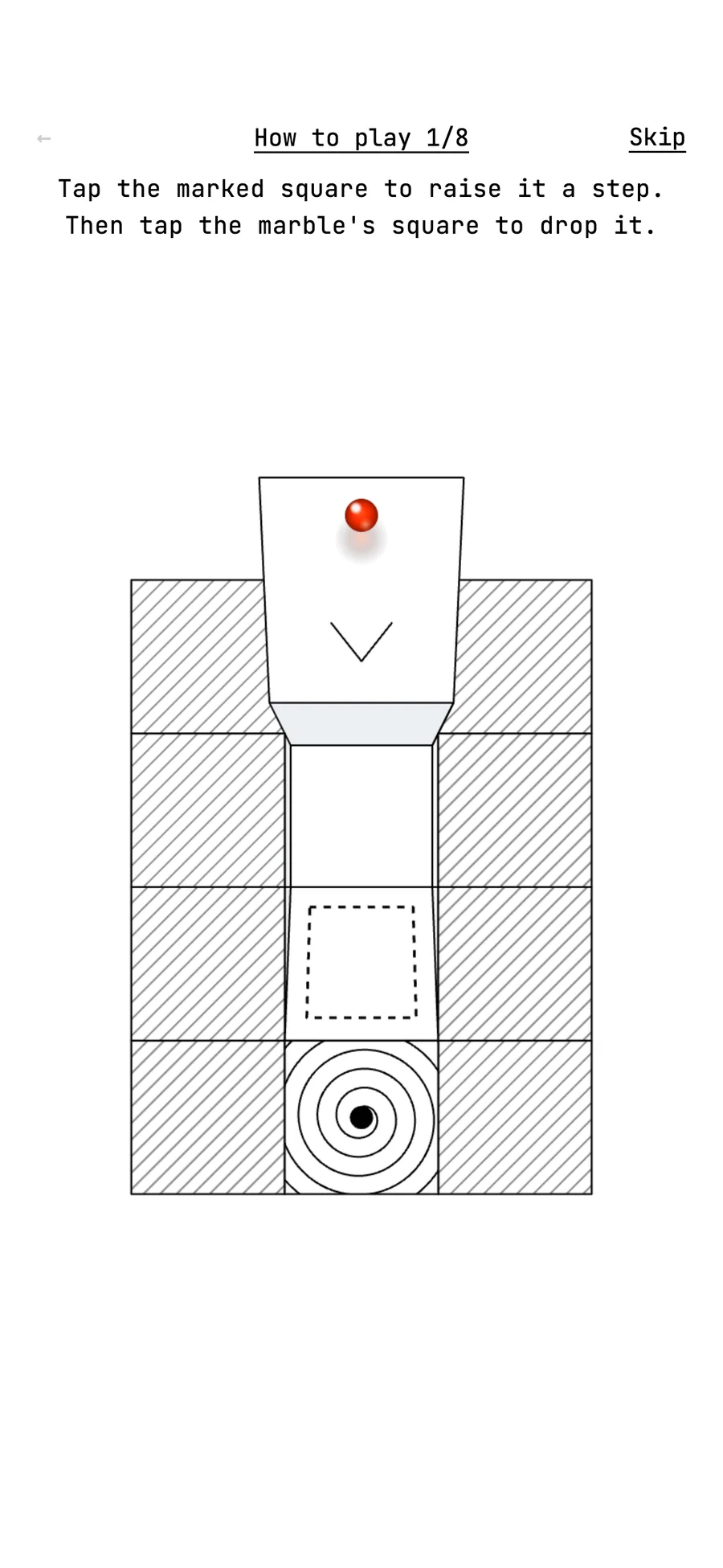
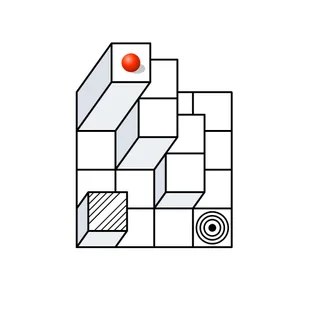
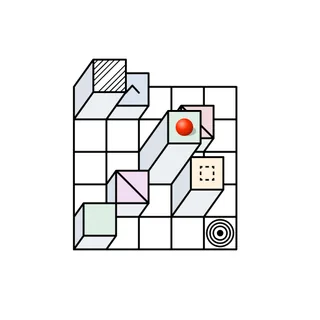
Gravolo is a marble puzzle drawn in a single black line. Every level is a small landscape of squares, a start and a hole. You raise and sink the squares to build slopes, then drop the marble and watch it roll. There is no aiming: if the ground is right, the marble finds the hole.

Shape the ground, drop the red marble, and let gravity finish the puzzle.
- 01Shape
Tap a square to raise it a step, double tap to sink it. The slopes you build are the only thing that moves the marble.
- 02Drop
Tap the marble and it rolls, for real, on a deterministic physics engine. No aiming, no luck. If it stops or falls off, change the ground and drop again.
- 03Watch
When it finds the hole, the board settles back to zero in a wave and the camera dives through the hole into the next level.
The idea
Most marble games are about hand skill: tilt, aim, time the flick. Gravolo moves the whole challenge into thinking. You build first, then let go, and the physics does the rest. Because the marble always rolls the same way twice, a failed drop is information, not bad luck.
Who it is for
A calm, fair puzzle for a wide audience. A level takes a minute or ten and can be put down at any moment. Trying costs nothing: failed drops are free, so the only pressure is the one players choose, playing for fewer moves.
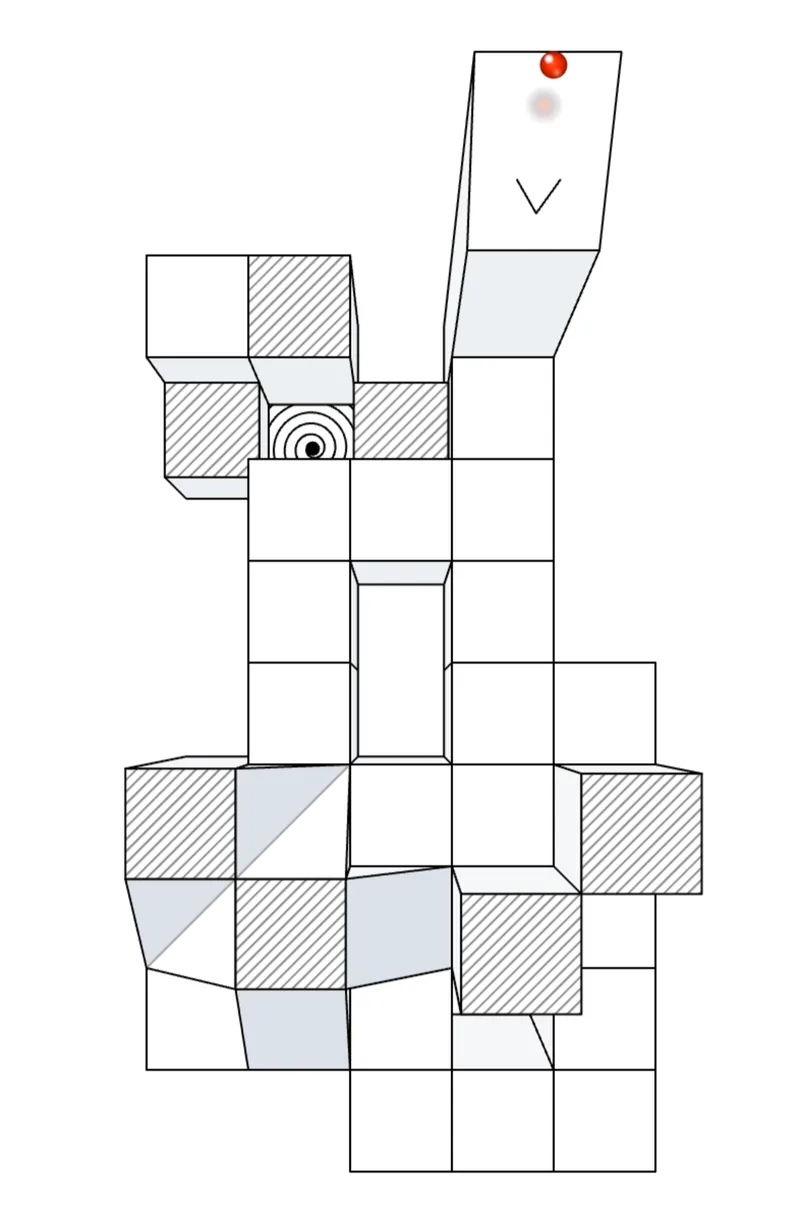
Everything is drawn as a technical drawing: a single black line, squares in true perspective that lean outward as they rise, and slopes shaded by one light. The marble is the only saturated thing on screen, so the eye always knows where to look.
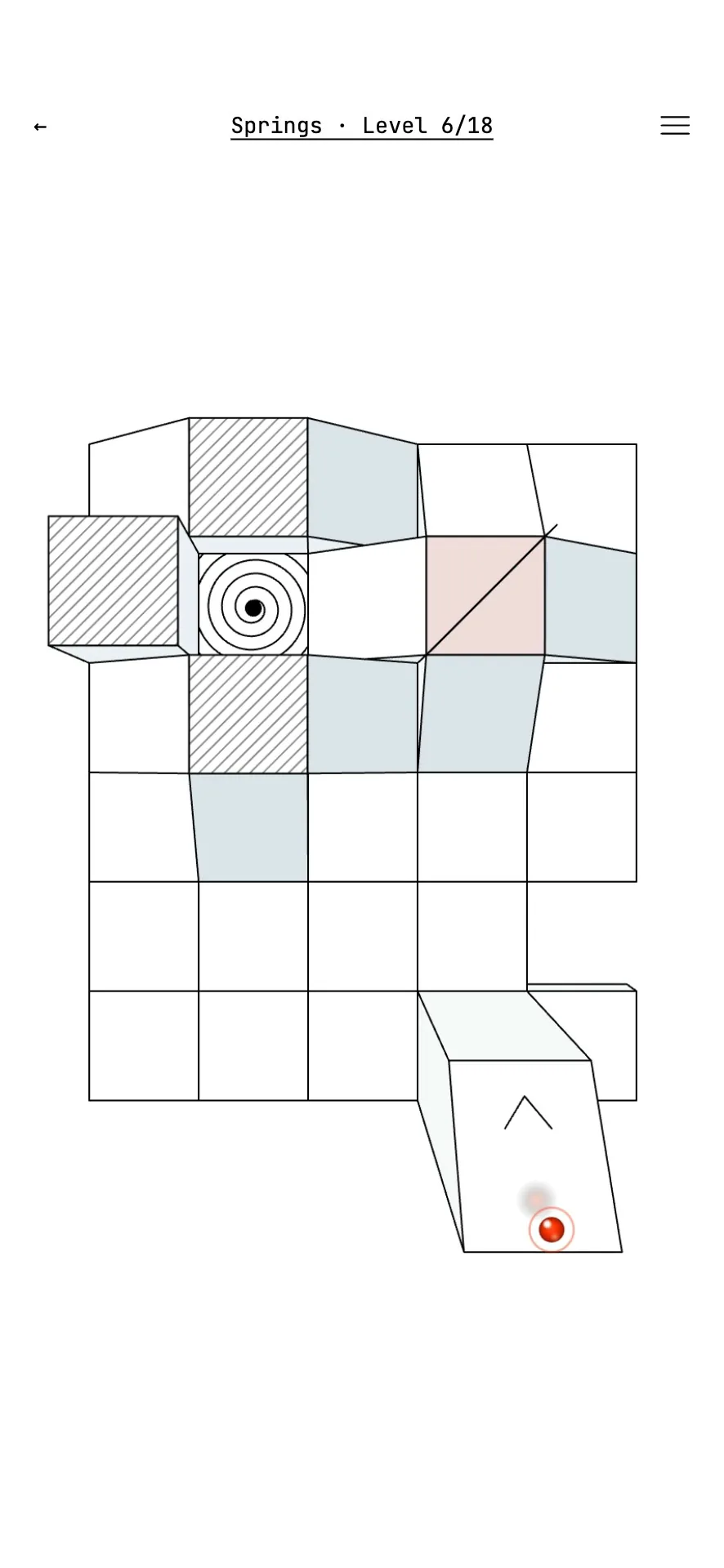
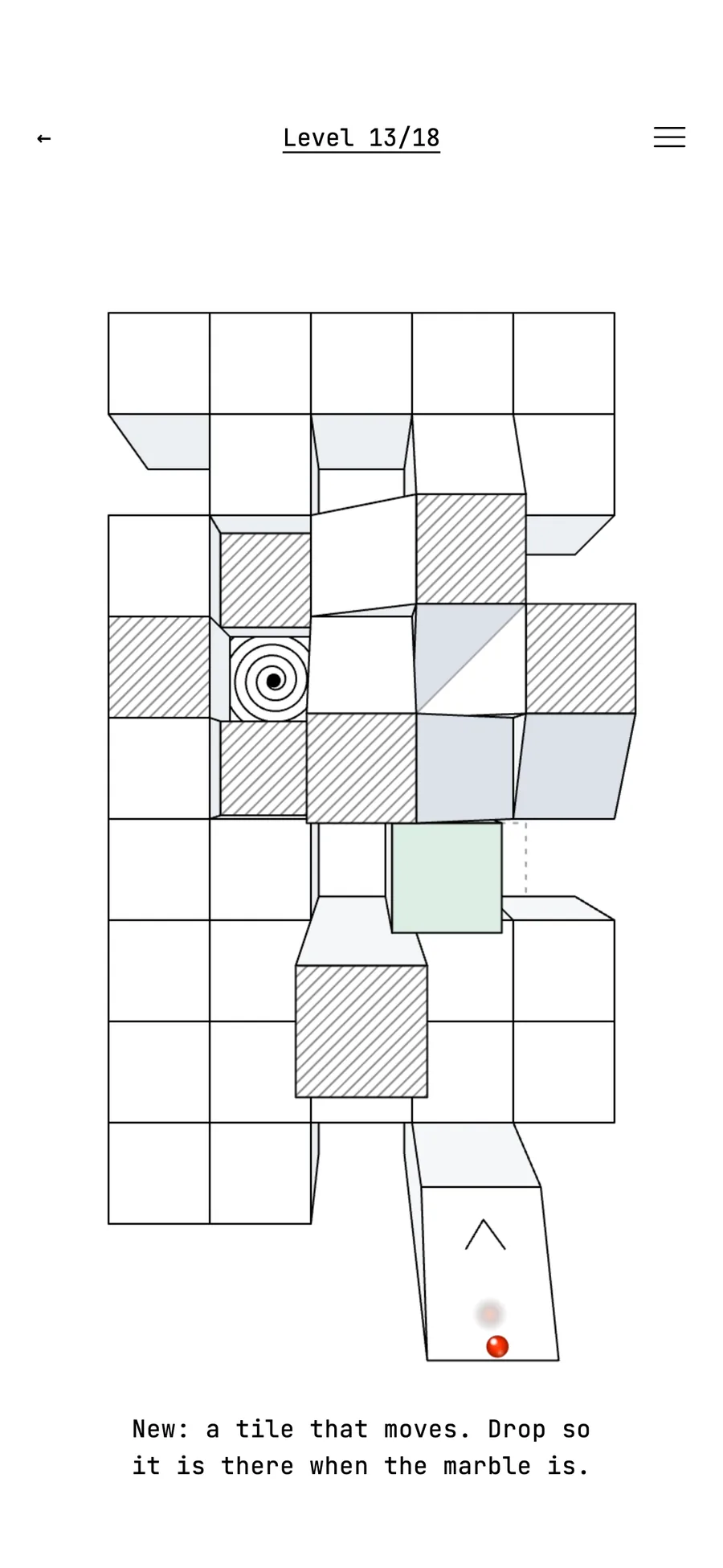
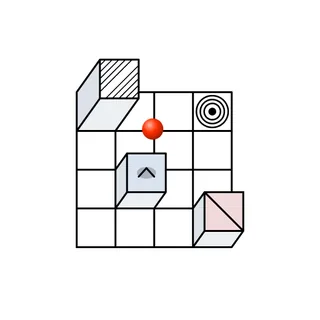
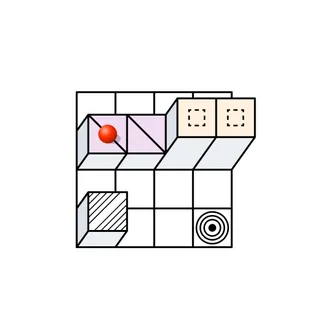
Machines get pale tints, so a board reads at a glance:
 BumperTurns the marble 90 degrees
 SpringThrows it into the air
 PlankTips as the marble rolls past
 ButtonRaises a bridge
 Moving tileSlides or lifts on a loop
Type
JetBrains Mono at one weight, and nothing to read but moves, target, level and set. The interface stays out of the way of the board.
Sound
Made live, with no audio files: glass tinks when the marble strikes, a bending note for a spring, a tock for every block, a chime for the hole. On iPhone the Taptic Engine answers each strike, harder when the marble hits harder.
The game teaches by adding one idea at a time. Seven short How to play boards come first, so a new player is solving within a minute.
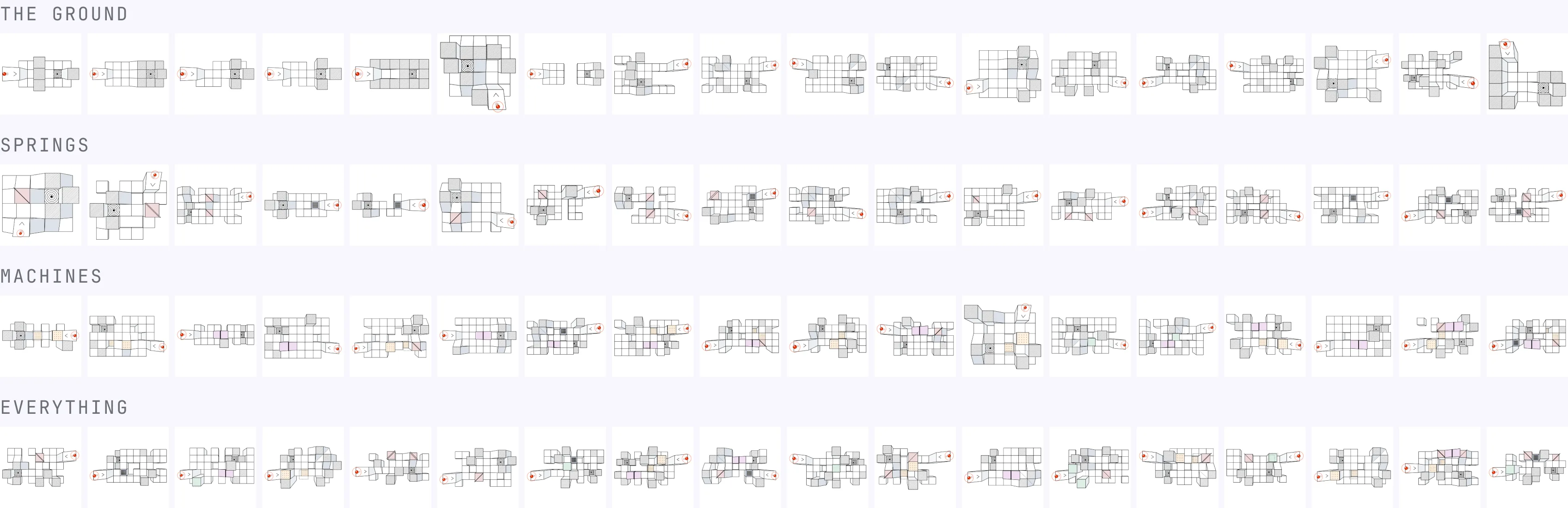
01The Ground
Squares only. Learn to read slopes, gaps and walls.
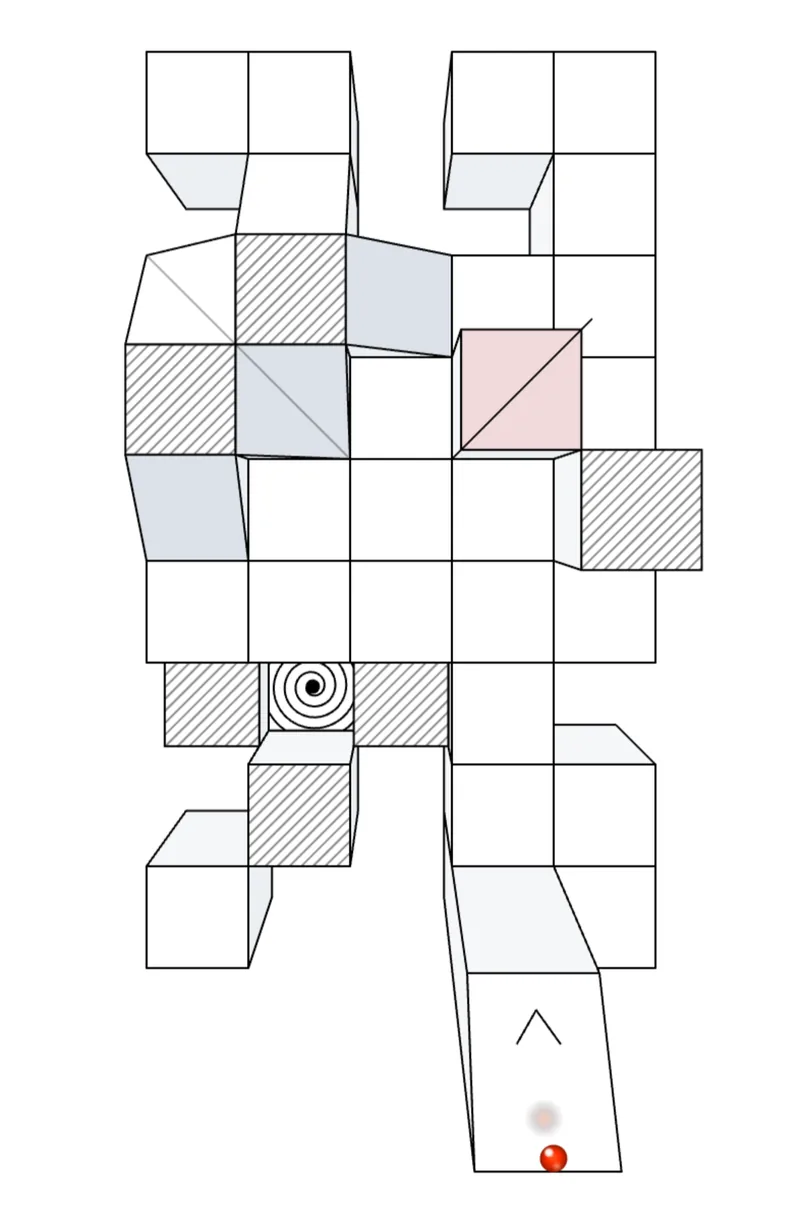
02Springs
Bumpers that turn the marble 90 degrees, and springs that throw it into the air.
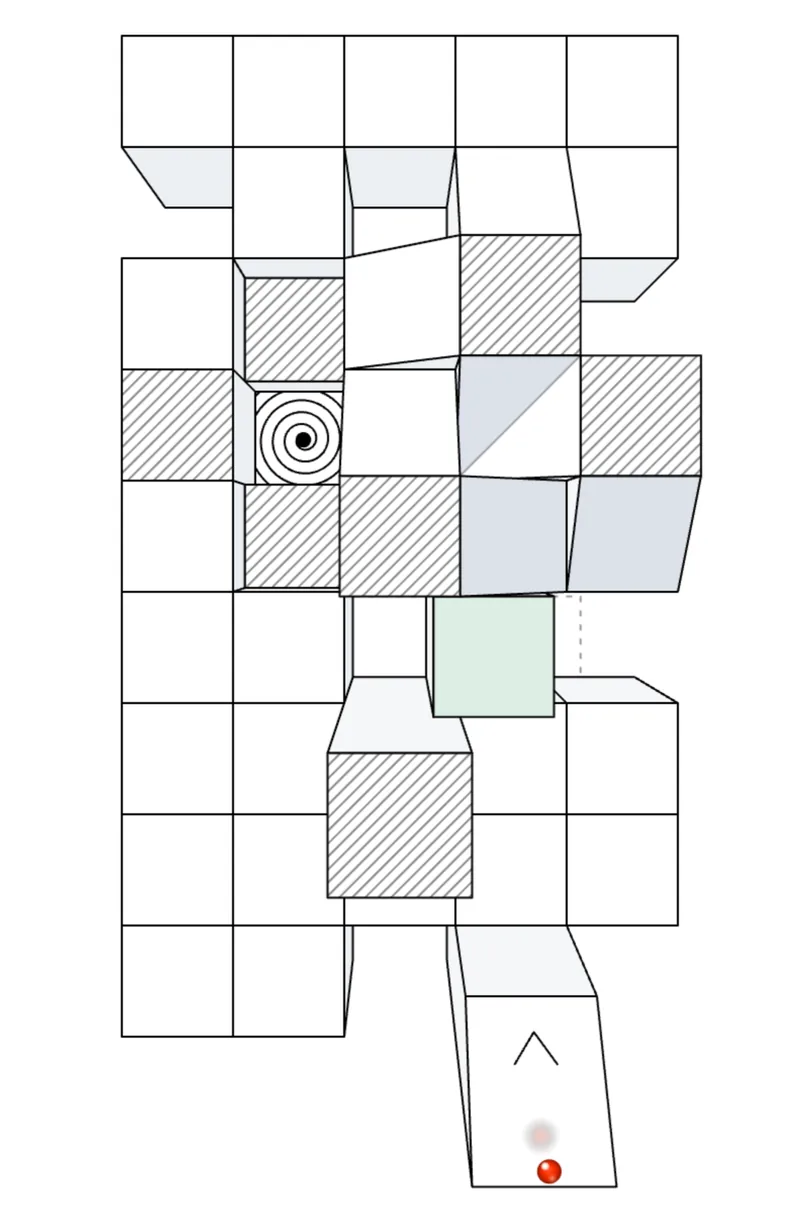
03Machines
Planks that tip as the marble passes, buttons that raise bridges, and the first moving tiles.
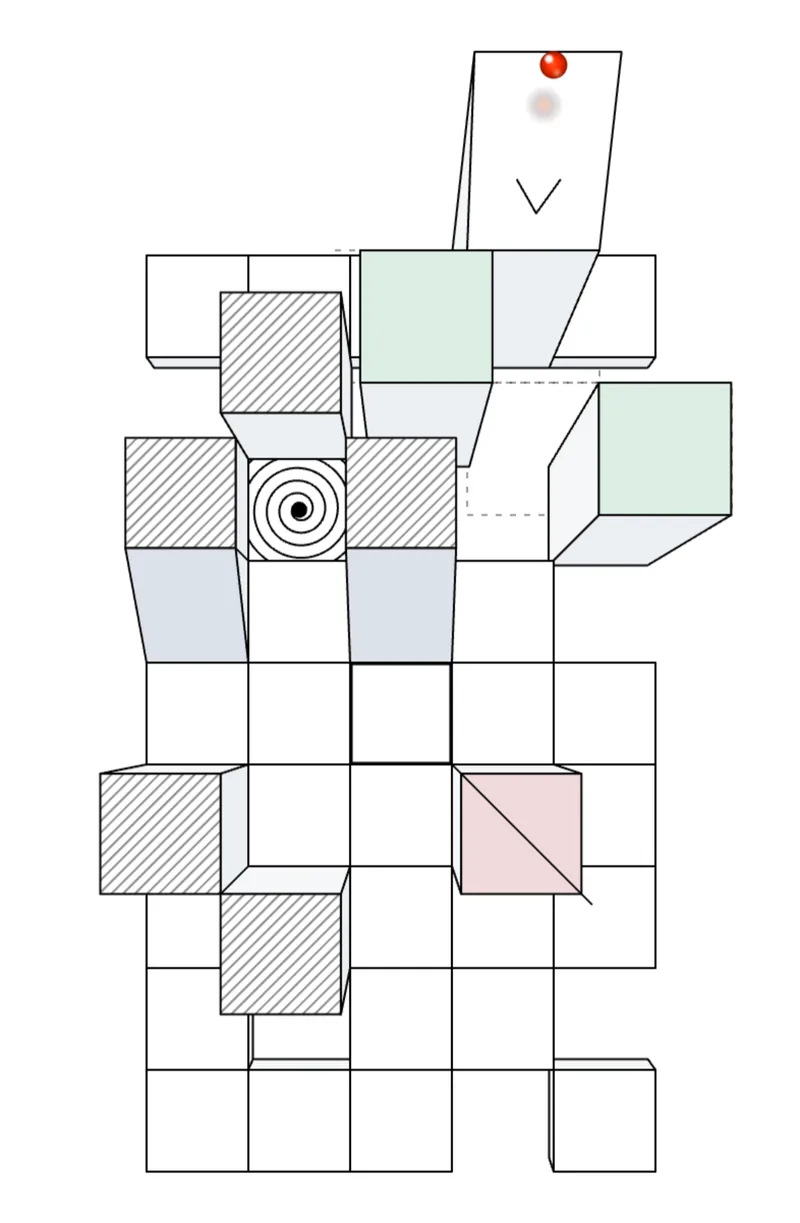
04Everything
All of it together, with sliding tiles and lifts where the moment you drop matters.
Each level is grown from a route, a path from the start to the hole with the heights that carry the marble, and then flattened. It is kept only if the flat board fails and the route wins from three slightly different drops. Where tiles move, it must win across a window of at least half a second. The target is the cheapest build the solver found.
A move is one step of one block, counted net: a block raised two steps and lowered one costs one. Every level has a target, and every solve goes to that level's Game Center leaderboard, with time as the tiebreak.
- 01Hole in one
Solved in a single move.
- 02Perfect
As few moves as the solver found.
- 03Great
Under the target.
- 04Solved
On or over the target. Still a win.
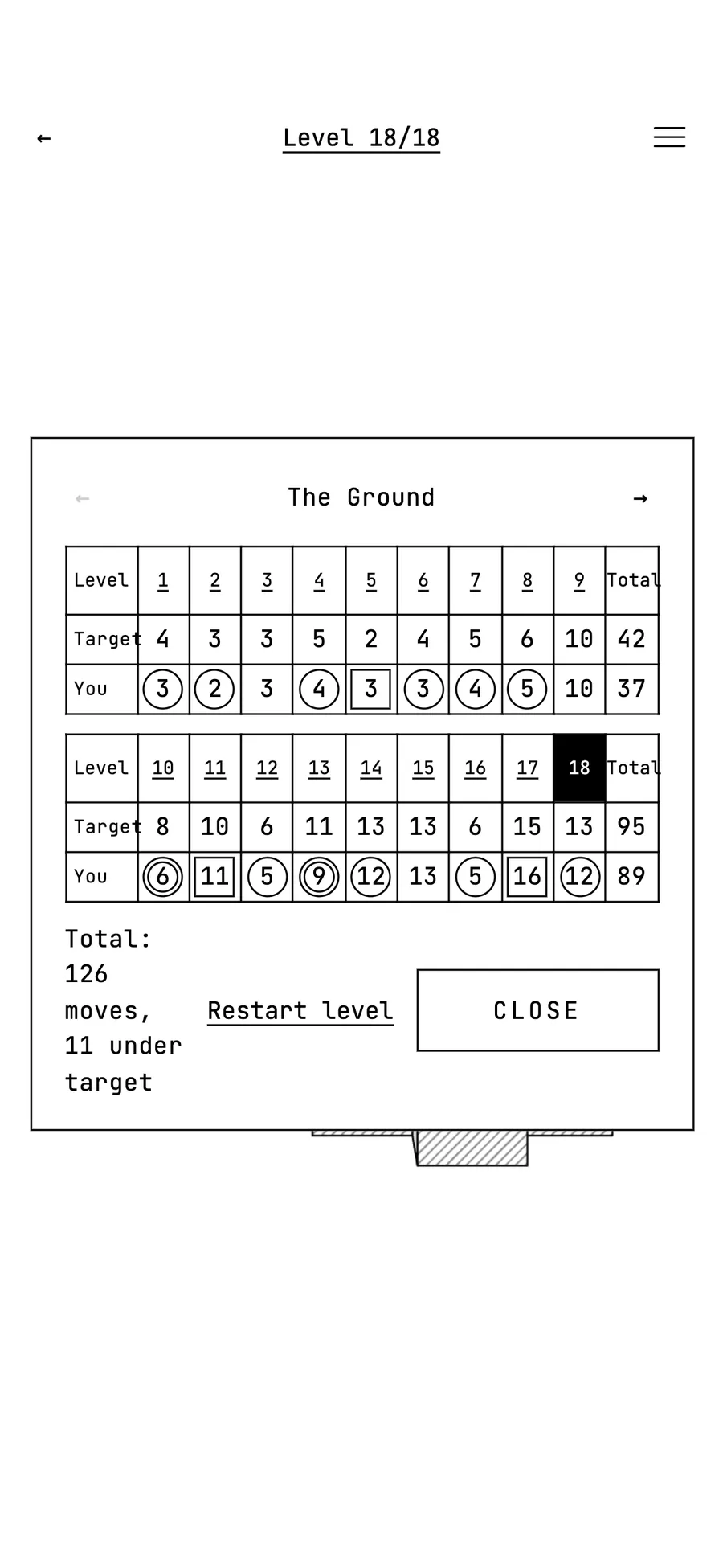
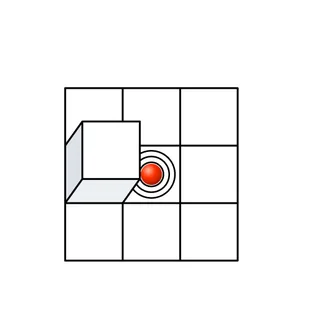
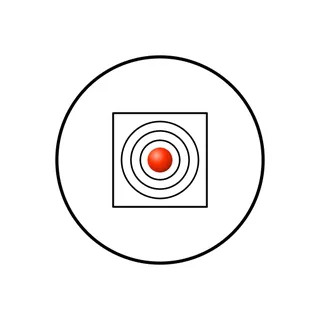
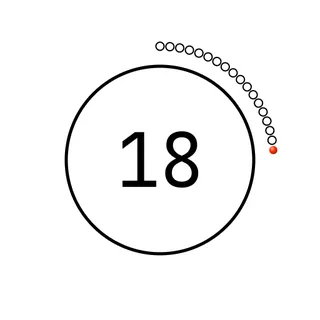
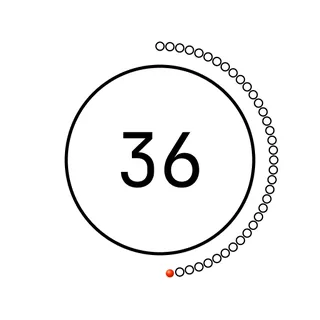
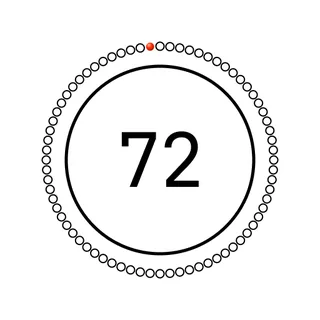
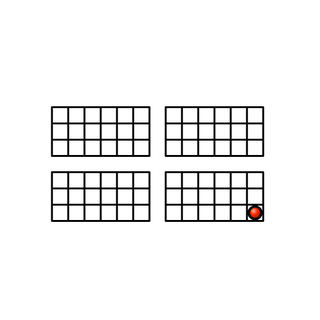
Drawn in the same line as the boards: one for each set, a hole in one, Perfect runs of 1, 18, 36 and 72 levels, and every level solved.
- 01Game Center
A leaderboard for every level, one per set for the total, and ten achievements. The in-game board shows the global top and where you stand.
- 02Haptics
Taptic Engine feedback for every block step and every strike of the marble, scaled by how hard it hits.
- 03iPhone, iPad and Mac
Portrait, landscape and large-screen layouts. Keyboard play on iPad and Mac, and game controllers work too.
- 04Accessibility
VoiceOver labels on every control, each board described with its level, moves and target. Reduce Motion is respected.
- 05Motion
On iPhone and iPad the view leans gently with the device's tilt. Only the view: the marble follows the slopes you built.
- 06Nothing in the way
No ads, no purchases, no accounts, no tracking. Works offline, and progress follows the player between devices through iCloud.
Gravolo is complete and in beta on iPhone, iPad and Mac. Design, code, levels and sound are all Studio Ross, made by the same hands.